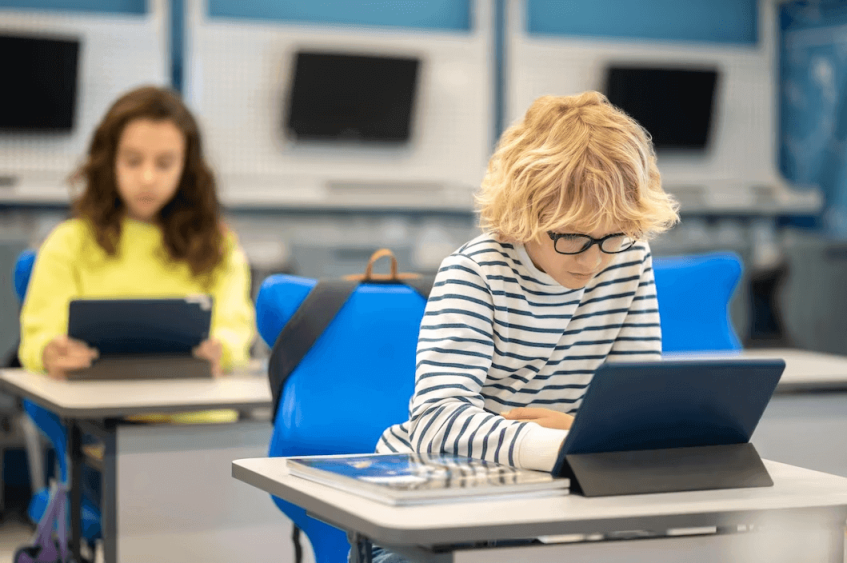
Blended Learning is a relatively
new
concept in the world of education that made its debut in the early
2000s. As technological
advancement was widespread, computers and
tablets made their way into classrooms at a rapid rate. Many
educators
then realized the power of technology in transforming the educational
process.
But to begin this transformative
process, it is important to note the basic
impact of technology on
students' learning before considering how blended learning has evolved
in the
school setting.
Findings of a Survey Conducted by Laher & Boshoff,
2017
In a study completed by a South
African
University, close to 300 students were given iPads to use in the
classroom and at home to complete
educational tasks. After finishing a
year of using the iPads, students and parents were surveyed
concerning
the usefulness of the technology. In the study, it was found that
technology had a positive
impact on the students' attitudes concerning
technology in a school setting. All of the students surveyed
stated that
they would continue using iPads for school purposes in the future as
well.
Since the basic use
of iPads has been
successful in brick-and-mortar campuses, the use of technology has been
taken to a
deeper level through the integration of blended learning. It
began by substituting paper copies for digital
platforms when
distributing, submitting, and grading assignments (which can be done via
learning
management software). As it proved beneficial for students and
teachers alike, teachers began to question
how they could further use
technology to deepen the understanding of students and personalize their
learning experiences. This realization made way for blended learning.
Table of Contents
- Overview of Blended Learning
- Distinct Blended Learning Models
- Understanding the Positives of Blended Learning
- Blended Learning Technology
- Blended
Learning in Corporate Training
- Leveraging the Visuality Factor with Blended Learning
- Conclusion
Overview of Blended Learning
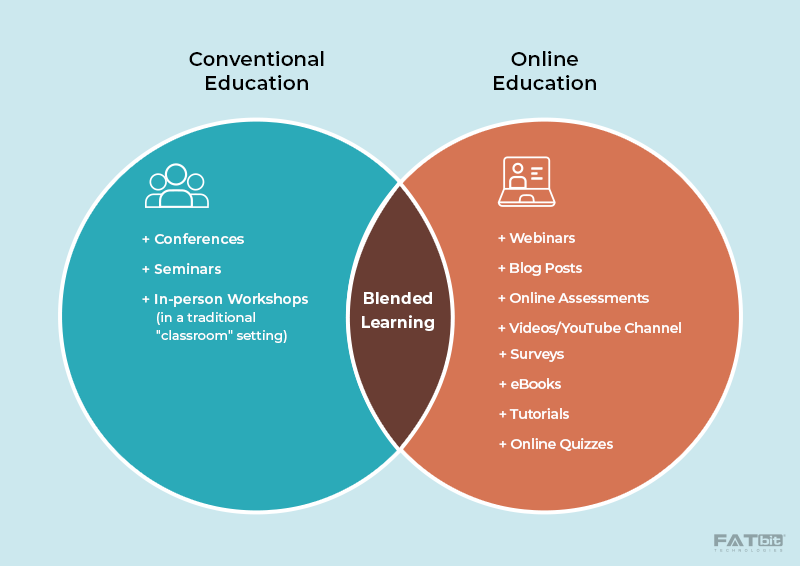
Blended learning or hybrid learning
is a major segment
of the continuum between traditional face-to-face and
fully online settings. According to the Glossary of
Education Reform,
blended learning is generally applied to the practice of using both
in-person and
online learning experiences when teaching students. This
kind of
learning uses online technology to transform and improve the learning process and not just supplement it.
Further, in a blended learning
approach, the teacher's role from knowledge
provider is shifted to that
of a coach or a mentor. This shift does not imply that the teacher takes
a
passive role. It's quite the contrary with blended learning. As more
students are working independently,
time opens up for teachers to
provide individualized support and attention to them.
Learners Centricity - Need for Flexibility
In the
realm of educational
transformation, the student's needs, learning, and growth are given more
weightage.
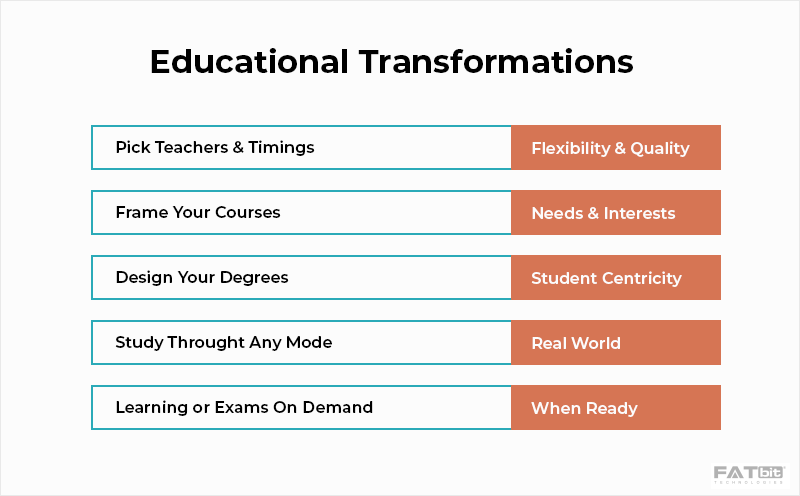
According to the Academic Bank of Credit, learners are
provided with the flexibility to pick teachers and
timings, frame their
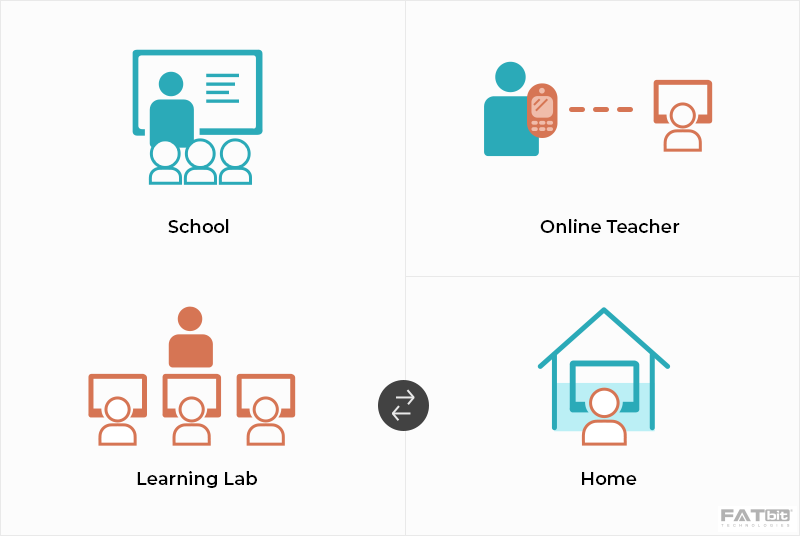
courses as per their needs and interests, and give exams when ready. The
graphical
representation below presents the idea.
Distinct
Blended Learning Models
Blended learning provides
the
ultimate flexibility in many aspects. Although there are a few basic
models of blended learning, the
possibilities are endless when it comes
to the ways in which the instructional technologies can be blended
into a
teacher's pedagogical approach. Below we discuss a few:
Flex Blended Learning
Model
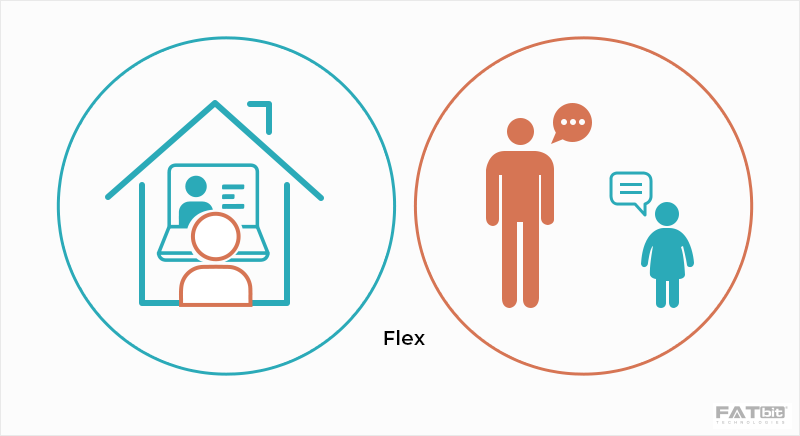
In the Flex model, most of the
curriculum is delivered
via a digital platform. Here, online learning is
the backbone of student learning and teachers are available
for
face-to-face consultation and support. The students work independently
and learn to develop/create
new concepts in a digital environment. The
model provides a flexible learning environment as students are
free to
arrive at the brick-and-mortar campus at any given time of the day. The
teacher in this model
acts as a mentor and guides students through the
learning process by delivering proper instructions.
The ‘Flipped Classroom' Blended Learning Model
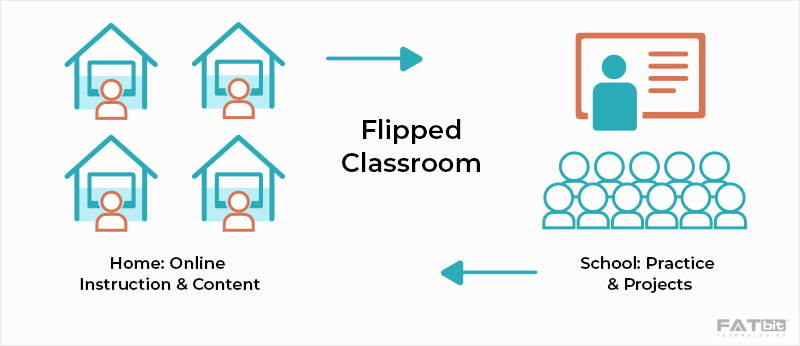
The most widely known version of
blended learning, a
‘Flipped Classroom' is where students are introduced
to the content at home. They practice working through
it at school
supported by a teacher and/or peers. In this method, the traditional
role of each other is
flipped. Such as students watching online lectures
and then collaborating in online discussions. This also
means that the
students carry out research at home while actively engaging in concepts
in the
classroom.
Resources such as video lectures,
recordings, podcasts, and articles are provided to transfer the main
bulk of the necessary knowledge from
the teacher to the student before
each class. This frees up time in class for teachers to support
students
in activities that lead to discussions, and facilitate engagement (such
as quizzes and other
games).
Lab Rotation Blended Learning Model
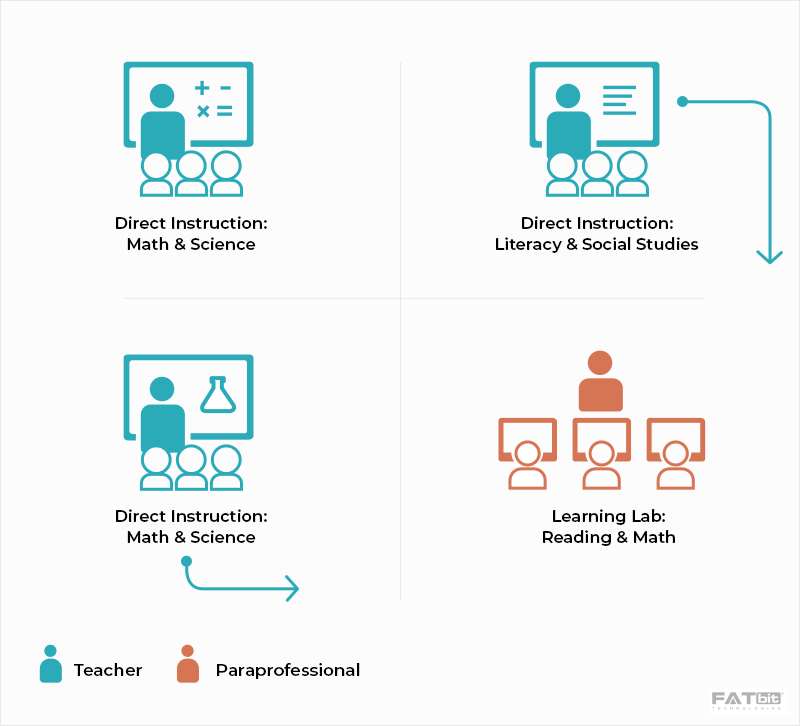
This is another model of blended
learning which works by
allowing students to rotate through digital
stations on a fixed schedule, i.e. learners are required to
physically
change rooms. Learners rotate to a computer lab for online learning
activities rather than
staying within the same classroom. This model
seems to be popular in the following environment:
- Elementary
classrooms in which students can be divided
based upon their skill
levels, for example - reading and Math. Thus students who are performing
well
in reading may have face-to-face time with their teachers for Math
before rotating to the online
learning stations for reading.
Face-to-Face Blended Learning Model
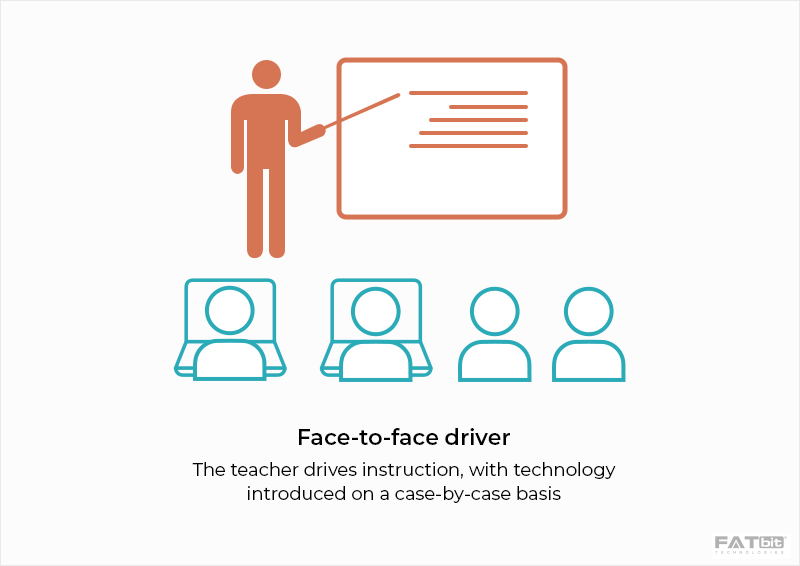
As the name implies, the face-to-face
model of blended
learning involves a great deal of student-teacher
interaction. It is primarily (although not always)
delivered through
classroom teaching, where students are in physical attendance. Here, the
teacher
drives the instruction, augmented with digital tools. With this
approach, the introduction of online
instruction is decided on a
case-by-case basis, i.e. only a certain number of students who are
struggling or working above their grade level are facilitated to
progress at their own pace (using the
technology).
Online Lab Blended Learning Model
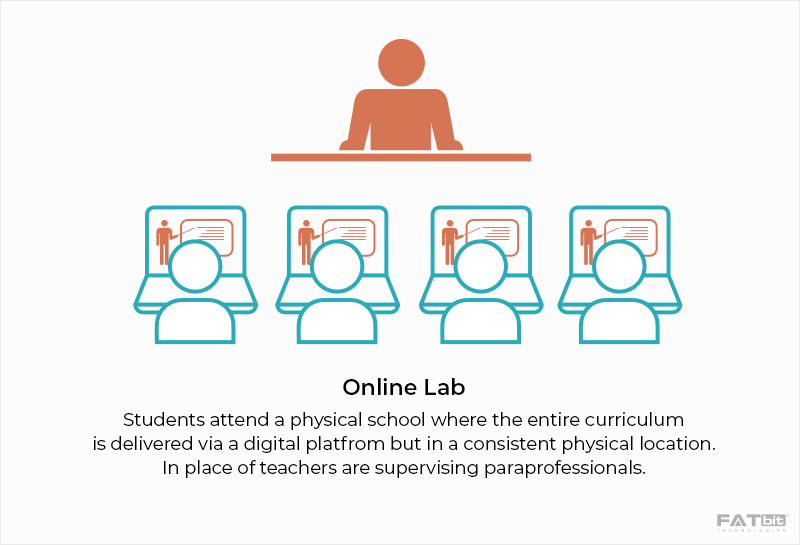
As schools increasingly face tighter
resource
constraints, the online lab model is a viable option for
helping students complete their courses including
those not offered at
the specific site. In this scenario, all of the curricula are delivered
via a
digital platform but in a consistent physical location (such as a
computer lab). Individuals supervise the
lab, but they are not teachers
who are trained. Further, this model allows schools to offer courses for
which they do not have enough teachers.
Self-Blend Blended Learning Model
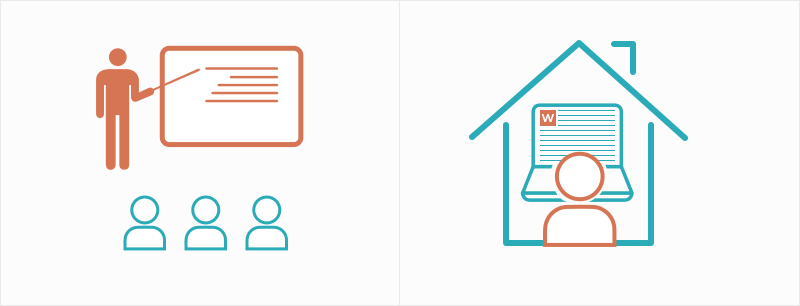
The self-blend model of blended
learning allows students
to augment their traditional learning with
online coursework. For this model of blended learning to be
successful,
students need to be highly motivated. It is ideal for students who want
to take additional,
advanced placement courses or those who are
interested in a subject area that is not covered in the
traditional
course catalog.
Online Driver Blended Learning Model
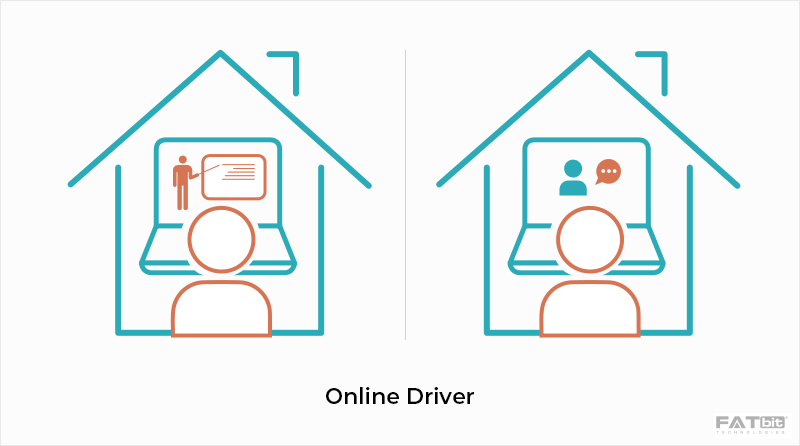
Opposite to the face-to-face model,
the online driver
model is where students work remotely and the material
is delivered via an online platform. Although
face-to-face check-ins
are optional, students can usually chat with teachers online if
necessary. This
model of blended learning is perfect for students who
need more flexibility and independence in their daily
schedules.
À La Carte Blended Learning Model
In the À La Carte blended learning
model, learners take
an online course in addition to the core
curriculum. This means that students have the option to pick and
choose
courses online as a way to supplement their existing course load. The
students are expected to
get the work done by a given due date. Further,
the communication with the instructor happens online via
email or
another chat program.
Understanding the
Positives of Blended Learning
Online
learning is one of the
fastest-growing trends in the education sector. As per a survey by Allen
and
Seamen, more than 2,800 colleges and universities have reported the
following:
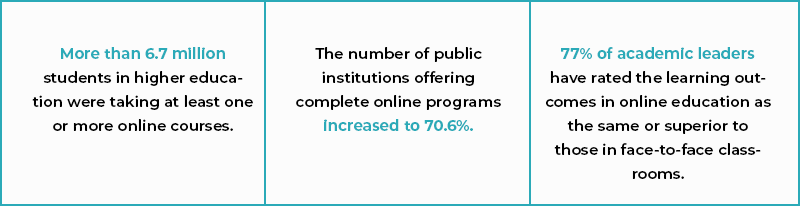
As noted above, the survey suggests
that online
education can not only match, but also surpass traditional
face-to-face learning. Hence, mentioned below
are some of the advantages
of online education amalgamated with face-to-face teaching, i.e.
blended
learning.
Personalized Learning Experience
As an adaptive instructional model,
blended learning facilitates
personalized experiences by leveraging
new-age edtech technologies. The approach enables students to
acquire
knowledge in their preferred ways, such as by reading ebooks, watching
video lectures, or
watching podcasts. At the same time, teachers can
leverage software solutions to track the progress of
every student and
help them understand content by suggesting relevant learning material,
providing
assistance, and answering questions.
Provides Real-time Feedback and Advice
In a brick-and-mortar campus,
teachers need
time to measure the performance of individual students.
They have to review assignments or evaluate
papers before sharing
feedback. But with the approach of blended learning, teachers can share
feedback immediately. They can measure the performance of students using
a variety of options, including
online quizzes and tests, and can share
the feedback without putting in extra effort or time. Also,
the
performance of slow learners can be boosted by giving advice or
providing assistance at the
right time.
Opportunity for Collaboration at a Distance
The conventional learning approach
mostly makes students
collaborate with their classmates. But blended
learning creates opportunities for students to
collaborate with other
learners across institutions at different locations. A student can join
online discussion forums to discuss and understand a topic or concept
from multiple perspectives. This
collaboration aids students to retain
knowledge along with acquiring soft skills that will help them
boost
their professional growth in the future.
Blended Learning Technology - Making
The Right Choice
As you begin to chart a
blended
learning program, you will need to plan out the educational technologies
that you will use
for the same. Educational technologies are initially
defined in terms of hardware like mobile devices,
computers, or laptops
and the networks (wired and wireless) that connect them. But in blended
learning, technology is a system or a tool that is used to solve
problems. While many companies offer
blended learning tools, not all of
them are equal. Mentioned below are some of the points that should
be
considered before making the definitive choice.
Adaptability
Every learner has a different
learning style. It may
require a faster or slower pace. With this in
mind, always find a tool that adapts to the needs of each
student or
employee. Many blended learning tools offer additional instructions to
learners. Even the
instructors will be able to see who may be in need of
help and contact them.
Clear
Data
A hybrid learning tool tracks all
the
aspects of a student's learning. In addition to test scores, the tool
should track how long each
student takes to complete a task. Further, a
tool that shows video engagement can give great feedback on
how well the
content holds learners' attention.
Ease of Use
It can be challenging for a teacher
or a tutor to
specialize in several fields as being acquainted with
different subjects is not feasible. Hence, a good
blended learning tool
should give instructors access to helpful resources. Moreover, this help
can
guide both the learner and the instructor to success.
Blended Learning in Corporate Training
Blended learning offers individuals
the opportunity to study further,
thereby, enabling lifelong learning.
In this section, we share a few examples of how enterprise
companies are
using blended learning to improve their programs related to employee
training and
development.
Intel
Intel, the microprocessor behemoth,
takes
pride in its record of minimal product defects. Hence, it requires
its technicians to be proficient
with the equipment and also perform
preventive maintenance and troubleshooting.
Since the competencies of the
technicians vary by location and
site, the company implemented a blended
learning approach to connect professionals with different
experience
levels across locations. The initial training was conducted over two
weeks with a
result of a 157% ROI with a benefits-to-cost ratio of 2.27.
The Boeing Company
The Boeing Company (aviation company)
wanted
to improve its CTL (Capture Team Leader) training to reflect the
work that the business development
role performs in the organization.
So the company devised a blended learning solution that included
small
web-based training lessons.
The
curriculum allowed the employees
to gain a foundational understanding of the CTL role,
responsibilities,
and the tools needed. This approach also enabled them to practice the
skills
of a CTL before attending the live session. The outcome was that
82.5% of the respondents could
immediately use the course content on the
job, and 100% responded that they would recommend the
course to a
colleague.
Ernst & Young
The multinational professional
services firm,
Ernst & Young started adopting blended learning
solutions in 2000. Soon after, the company was
able to reduce its
training costs by 35% that too without sacrificing the consistency and
quality of training. In fact, the eLearning techniques of Ernst &
Young became scalable as they
were able to condense 2,900 hours of
classroom learning into 700 hours of web-based learning, 500
hours of
classroom instructions, and 200 hours of distance learning, cutting
total training time
by about half. Further, the streamlining of the
L&D process had far-reaching consequences as the
company was able to
launch a global eLearning platform to engage its 100,000+ workforce.
This
led to reduced costs and improved professional development.
Leveraging the Visuality Factor with Blended Learning
Online learning success stories
demonstrate that videos are a
crucial tool for the online segment of
blended learning. It has been established that 83% of
institutions use
videos as a form of learning (for their remote teaching and learning
programs).
And, 84% have seen the positive impact of videos on students
learning. So, a part of the job in a
blended learning environment is to
have videos (screen recordings, demonstrations, and more). Hence,
while
searching for the right online education platform for blended learning, a
rich suite of
video capabilities should be available in it. This is
where Yo!Coach, a product of FATbit
Technologies can help.
Yo!Coach is a
best-in-class, online
tutoring software that allows entrepreneurs to launch a blended learning
platform with video-based interactive learning features. It is a fully
customizable and easy-to-use
software that is ideal for blended
learning.
Set of interactive features to
enhance online learning and consultation experience include:
- Audio/Video chat
- Virtual
Whiteboard
- Textpad
- Screen Sharing
- Screen
Recording
- Auto Translation in Real-Time
Chat
Conclusion
| "If we teach today's
students
as we taught yesterday's, we rob them of tomorrow." - John
Dewey |
Digital revolution is shifting the
landscape of learning, and
nowhere has the impact been greater than in
education. Even before the pandemic, blended
learning, a pedagogical
approach had been steadily gaining traction due to its
flexibility,
convenience, and cost-effectiveness. Even the educators have also
realized
that the one-model-fits-all approach to learning will not be
effective during this era of
the ongoing pandemic. Hence, the adoption
of visually powered blended learning is the need
of the hour as it will
fulfill the requirements of educating future generations.
Frequently Asked Questions
Q1. What is blended learning?
Blended learning is an approach that
combines face-to-face and online learning
experiences, giving learners
some control over path and pace. Ideally, both online and
offline will
complement each other by using their particular strengths.
Q2. What are the various models of blended
learning?
-A few models of blended
learning
are, the flex model, flipped classroom model, lab rotation model,
face-to-face
model, online lab model, self-blend model, online driver
model, and so on. However,
possibilities are endless due to the numerous
ways in which instructional technologies can
be blended into a
teacher's pedagogical approach.
Q3. What are the benefits of blended learning?
-Blended learning provides the following benefits:
- Personalized learning
experience
- Provides real-time
feedback and
advice
- Provides an opportunity
for collaboration at a
distance
Q4. What to
look for in blended learning technology?
-Several companies offer blended
learning tools but not all of these are equal.
Certain things that
should be considered are adaptability, clear data, and ease of
use.